
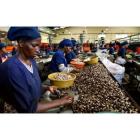











In recent years, the African tobacco market has shown dynamic growth. The African continent is vast and boundless, covering several globally important tobacco-producing countries such as Zimbabwe and Malawi, which send large quantities of high-quality tobacco to the world every year. The cigarette market has great potential and sales volume continues to climb, showing broad prospects for development and huge room for growth, and the demand for tobacco products continues to increase and cannot be underestimated.

Africa is one of the world's top producers of tobacco of the finest quality, covering several grades of spiced and semi-spiced tobacco as well as filler leaf. Tobacco cultivation and marketing are of great importance in African countries and are highly regarded and valued.
Zimbabwe, Malawi, Zambia, Mozambique, Kenya, Uganda, and Tanzania are among the core tobacco-producing countries in Africa that are very passionate about tobacco farming.
♦01 Zimbabwe
Zimbabwe's tobacco has been described by the BBC as "close to perfect", with a distinctive aroma, sweet caramel flavor, medium strength and mild kick. Tobacco is one of Zimbabwe's main export commodities and has been described as the country's "gold mine" of foreign exchange earnings, with 45 countries around the world importing tobacco from Zimbabwe.
Zimbabwe is located in the south of Africa, the climate is suitable for the growth of tobacco, full of sunshine, high temperature, big temperature difference between day and night, and sufficient annual precipitation, which is especially suitable for the cultivation of tobacco. The country's sandy soil is known as the world's "Golden Tobacco Field", planted tobacco leaves are soft and golden in color, so it is known as "Golden Tobacco", which has become the main raw material for high-end cigarettes. Even high-grade cigarettes from Europe and the United States are often adulterated with Zimbabwean tobacco to emphasize its high quality and value.
Zimbabwe is one of the major agricultural countries in Africa, and the tobacco industry plays an important role in its economy. The country once produced as much as 237 million kilograms of tobacco, ranking second in the world in terms of tobacco exports. The tobacco industry is associated with 40 per cent of export earnings and 20 per cent of GDP, and about 50 per cent of the population is associated with the industry.
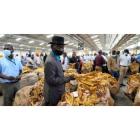
Zimbabwe's tobacco industry is characterized by a series of "3's", such as the division into three major planting areas in the north, the middle and the south, three major tobacco auction markets and three major tobacco roasting and processing plants. Since the implementation of the tobacco planting and purchasing contract system in 2004, the tobacco planting has realized the farm management, and the large planting area is convenient for mechanized operation and quality control. The tobacco auction process in Zimbabwe is lively and interesting, bags of golden-colored tobacco are auctioned in the trading hall, the auctioneer quotes quickly, and the buyers express their bids through gestures and shouts.
Under the leadership of the Tobacco Industry and Marketing Board (TIMB), Zimbabwe's tobacco production has continued to recover towards the 2023 production target of 250 million kilograms.
♦02 Malawi
Malawi is an important grower and exporter of tobacco, mainly white ribbed tobacco and dark roasted tobacco, of which white ribbed tobacco accounts for 70% and dark roasted tobacco for about 20%. Small amounts of roasted and flavored tobacco are also grown. Malawi ranks among the top 10 countries in terms of tobacco production out of the 120 countries that grow tobacco globally, and contributes 5 percent of the world's total tobacco exports.
Tobacco plays an important role in the economy of Malawi, which has one of the world's most tobacco-dependent economies, with at least 80 per cent of Malawians directly or indirectly associated with the tobacco industry. Tobacco is Malawi's main source of foreign exchange earnings, with the tobacco crop contributing 13% of GDP and annual tobacco sales accounting for 53% of the country's total exports and over 70% of foreign exchange earnings. Malawi produces 6.6 per cent of the world's exports of white-ribbed tobacco.
However, the development of the tobacco industry has also had a negative impact on the environment. A large amount of wood is cut down during the processing of roasted cigarettes, and the cultivation of white-ribbed cigarettes also requires a large number of trees for the construction of tobacco sheds and the drying of tobacco leaves. Data show that it takes at least 3 hectares of trees to roast one hectare of tobacco.
The Government of Malawi is aware of the environmental impact of the tobacco industry and is taking measures to address it. In addition to legislation, Malawi is implementing afforestation projects to increase forest cover. A nationwide reforestation campaign encourages tobacco farmers and the public to plant fast-growing species to reduce pressure on the environment and resources.
♦03 Zambia
Mozambique produces mainly roasted, white-ribbed and sun-dried tobacco. Tobacco cultivation is a major source of income for many households and an important source of revenue for the country. Production of white-ribbed tobacco is expected to exceed 60 million kilograms this year, demonstrating the remarkable progress of the country's tobacco industry, especially considering that less than a decade ago production was at a very low level.
♦04 Kenya, Tanzania and Uganda
Kenya, Tanzania and Uganda are important tobacco producers in Africa. in 2022, these three countries together produced about 120 million kilograms of roasted tobacco and 20 million kilograms of white-ribbed tobacco. Kenyan farmers living on the Tanzanian-Kenyan border reportedly prefer to sell their tobacco in Tanzania, where prices are higher. British American Tobacco decided to stop buying tobacco in Uganda in 2015 and shift its focus to the cigarette business.
In addition, South Africa produced about 20 million kilograms of white-ribbed and Virginia drying tobacco in 2022; and the DRC, which has 25,000 tobacco farmers, produced 15 million kilograms of roasted tobacco in 2022 in its eastern Goma region and 8 million kilograms of white-ribbed tobacco in its southern Kolwezi region.
 Home
 Cart
 Favorites

 Buyer Center
 Supplier Center
 Service Center
 Help

 Publish News
