
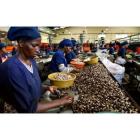













On the African continent, demand for mid-to-high-end consumption is growing at a rate of approximately 10% per year. This demand is expected to contribute up to $2.5 trillion to Africa's GDP by 2030.
This trend is reflected in a number of sectors:
● Tourism
● ICT
● Aerospace
● Renewable energy
● Food and beverage
●Textiles and Apparel
● Services
Africa has become a popular destination for attracting investment in mid-to-high-end consumer industries. Many of the continent's urban populations continue to grow and are expected to outpace the global average population growth rate of 20% over the next five years. By 2026, Africa will have nearly one-sixth of the world's population, 45% of which will live in cities. The trend towards urbanization will boost per capita consumption, with cities such as Cape Town, Lagos and Nairobi having per capita consumption rates more than double the national average. This will provide a significant boost to economic activity on the continent, triggering the emergence of substantial markets and more trade opportunities.
On the continent, more than 43% of the population belongs to the middle class or above, and their demand for mid- to high-end consumption is growing at about 10% per year. This demand is expected to contribute up to $2.5 trillion to Africa's GDP by 2030. However, recent developments have raised questions that investors and multinationals are beginning to ponder: is the rapid growth of Africa's consumer markets still worth investing in? Are African consumer markets still as attractive as they were in previous years?
The main mid- to high-end consumer industries involving Africa include tourism, information and communications technology, aerospace, renewable energy, food and beverage, clothing and textiles, and services.

Tourism in Africa is one of the most lucrative industries. With its unique environmental characteristics, rich biodiversity, multiculturalism and consistently good value for money, Africa's tourism industry is expected to continue to thrive. Currently, Africa's tourism industry is growing at the second fastest rate in the world, after the Asia-Pacific region. According to an analysis by the World Tourism Council, the number of people employed in South Africa's tourism industry is significantly higher than in the mining, communications, automotive and chemical manufacturing sectors.

In 2013, only about 13.5% of Africa's population had access to and used the internet, while during the same period, Africa accounted for 15% of the global population. By 2019, only 28.2% of Africa's population will have access to the internet, compared to 82.5% in the European region. In addition, about 83% of digital information services in Africa come from servers controlled by other continents. Parameters such as the number of subscriptions to Internet providers, the total number of servers, the amount of traffic in Internet exchanges or the amount of available bandwidth capacity show that there is a huge scope for growth in the digital space in Africa.
Compared to other regions, Internet penetration in Africa is relatively low. Despite its low contribution to Africa's GDP, the Internet industry is expected to grow at a sustained rate of 6% until 2025. It is generally recognized that the diffusion of Internet technologies in the African region can bring some important advantages. For example, Internet-based telemedicine and distance learning are expected to enhance the quality of life in remote rural areas of Africa.
Looking back to 2006, the entire African region had only 2% of the global telephone penetration rate. However, by 2020, Sub-Saharan Africa will have even fewer landlines than the Manhattan borough of the United States. Currently, Africa is one of the fastest-growing markets for mobile telephony in the world and the second largest in the world, with 8 out of 10 Africans owning a cell phone. In terms of digital technology, the continent's mid-to-high-end consumers are leapfrogging the landline era and moving straight into mobile digital technology.

Africa's space industry is experiencing continued growth in capacity size and investment. According to a 2019 report, Space Africa, an organization, puts the value of the African space industry at approximately $7.34 billion and predicts that it will continue to grow in the coming years.
More and more governments are embarking on the development of new space programs. The Egyptian and Rwandan governments have established and put into operation their own space agencies in the second half of 2019 and the first half of 2020. A number of other countries have publicly announced their space programs and are funding them through federal budget allocations. In total, African governments invested about $490 million in space programs in 2020, compared to $250 million the year before, not including investments in infrastructure development for satellite procurement centers.
However, the New Crown epidemic has had an impact on the space industry, mainly in the form of delays in launch schedules, suspension of the manufacturing process and the filing of bankruptcy by some companies. In Europe, governments have warned that the outbreak could affect the space industry by as much as 1 billion euros due to reduced investment in the private sector. In Africa, the impact has manifested itself in more complex ways. A number of relevant conferences, such as the 16th International Space Operations Conference (SpaceOps), the African Astronomical Society's 2020 Founding Conference (AfAS2020), and the International Academy of Astronautics' (IAA) inaugural Small Satellites Symposium, have also been canceled or postponed.
 Home
 Cart
 Favorites

 Buyer Center
 Supplier Center
 Service Center
 Help

 Publish News
